
Lipid Profile Test In Dubai
Do you need a lipid profile test in Dubai? A lipid profile test is a blood test which measures the levels of your cholesterol as well as triglycerides to determine the risk of developing a heart attack and stroke. This test helps identify cholesterol earlier, before signs begin to appear, which allows for lifestyle changes or treatment. In Medilife Polyclinic in Dubai, we offer accurate tests of lipid profiles along with medically trained guidance for you to understand your results and to maintain good cardiovascular health. If you’re going for regular health checks and suffer with diabetes, high blood pressure, or you have an ancestral medical history of heart disease, taking a lipid profile test can be important to safeguard your heart health.
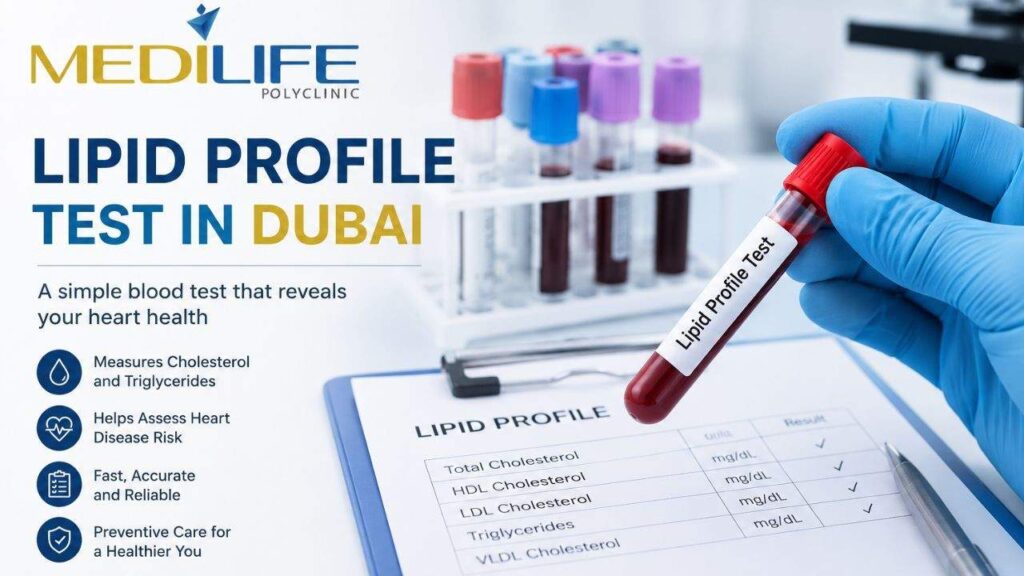
What Is A Lipid Profile Test?
The lipid profile test, sometimes referred to as a cholesterol panel or cholesterol test, tests different kinds of fats (lipids) within your blood. These tests provide crucial details about your health and fitness and can help you determine the chance of developing heart disease.
The lipid profile test is a laboratory test which measures the amount of various types of fats (lipids) in the bloodstream of your body. It’s among the most efficient tests used to assess your likelihood of suffering from cardiovascular illnesses which include heart attacks or stroke as well as atherosclerosis (hardening of arterial walls). Because high cholesterol can develop without a noticeable symptom, routine tests for lipids play crucial roles in the early detection and preventive measures.
This includes:
Total Cholesterol: The total amount of cholesterol that is present in your blood.
Triglycerides: A form of fat that your body utilizes to provide energy. The presence of triglycerides can raise the chance of developing heart diseases, in particular when they are coupled with the presence of high LDL or the low HDL cholesterol.
HDL cholesterol: It is also known for its good cholesterol, it assists in eliminating excessive cholesterol from the bloodstream and then transports it into the liver for elimination.
VLDL: A lipoprotein which carries triglycerides. It could also be responsible for the constricting of the arteries when they are present in large amounts.
Besides monitoring your cholesterol levels with a lipid profile test, you can also book an antibody test in Dubai to support your overall health screening.
Who Should Get A Lipid Profile Test?
Doctors often recommend screening for cholesterol to:
Adults Over 20
Adults who are healthy should check their cholesterol every few months in order to prevent any lapses in medicine.
Smokers
Smoking reduces good cholesterol and can cause damage to blood vessels.
People who have a family history of heart Disease
Genetic factors play a significant part in the cholesterol levels of people, which is why early screening is crucial.
People with high blood pressure
High blood pressure and increased cholesterol can increase the risk of heart disease.
People Who Are Overweight Or Obese
The excess weight of the body can contribute to an increase in cholesterol and triglyceride levels.
What Does A Lipid Profile Test Measure?
A lipid profile test evaluates the levels of various types of fats (lipids) in the blood of your patients to assess the health of their hearts and determine the heart conditions. Every component of the test gives useful information regarding the way your body processes and moves cholesterol, as well as other fats.
Total Cholesterol
Total cholesterol refers to the total quantity of cholesterol present in your blood. It includes LDL, HDL, and various other components of lipids. Although your body requires cholesterol in order to create healthy cells as well as to produce hormones, excessive total cholesterol levels may raise the chance for plaque buildup in blood vessels and cause heart disease.
LDL Cholesterol
LDL cholesterol is often referred to in the industry as “bad” cholesterol due to the fact that it transfers cholesterol into the arteries, from where it may build up and create plaque. The accumulation could cause blood vessels to narrow and block vessels. This can increase the chance of heart attacks, strokes and various other cardiovascular conditions.
Cholesterol Ratio
This evaluates your total cholesterol against HDL cholesterol. The ratio gives you a deeper understanding of your risk of cardiovascular disease and helps doctors in determining whether modifications to your lifestyle or medical treatments are needed.
VLDL
VLDL is another type of lipoprotein which is primarily responsible for carrying triglycerides throughout the bloodstream. High VLDL levels could cause the formation of deposits of fat in blood vessels, which increases the risk of developing atherosclerosis as well as other heart problems.
Along with monitoring your cholesterol through a lipid profile test, a Thyroid checkup in Dubai and a Microalbumin Test in Dubai can provide a more comprehensive assessment of your overall health.
What Is The Normal Range For A Lipid Profile Test?
Lipid Profile Component | Normal/Desirable Range | What It Indicates |
Total Cholesterol | Less than 200 mg/dL | The ideal level to ensure the health of your heart. |
LDL Cholesterol | Less than 100 mg/dL (Optimal) | The lower levels of cholesterol reduce the chance of plaque accumulation and heart disease. |
HDL Cholesterol | 35 to 65 mg/dL (Men) 35 to 80 mg/dL (Women) | A level of HDL helps in eliminating excessive cholesterol from the bloodstream. It also helps prevent heart disease. |
Triglycerides | Less than 150 mg/dL | A healthy triglyceride level can reduce the risk of heart disease and pancreatitis. |
VLDL | 2–30 mg/dL | Healthy levels of VLDL indicate normal transportation of triglycerides in the blood. |
Symptoms Of High Cholesterol
It is sometimes described as a “silent condition” due to the fact that it doesn’t show any symptoms during its initial stages. A lot of people don’t realize they are suffering from high cholesterol until they are able to detect it by a blood test for lipids or after it causes serious heart problems. It is the reason that routine cholesterol testing is important, especially for people with risk factors, such as high blood pressure and obesity. Smoking is also a risk factor for a family history of heart disease.
While high cholesterol by itself seldom is a cause of signs, a buildup of cholesterol that is not treated may cause a narrowing or blocking of the blood vessels, which can cause symptoms of heart disease, which include:
- The pain in your chest or the discomfort (angina)
- Breathlessness when performing physical activities
- The sensation of pain, numbness or weakness in the legs because of decreased blood flow
- A sudden weakness or numbness that is felt on one side of the body
- Speech difficulties or difficulty speaking
- Visual problems, abrupt loss of sight
- Headache, dizziness or the loss of balance
How To Prepare For A Lipid Profile Test
- Fast for 9 to 12 hours before the test, particularly when triglycerides are measured.
- Take plenty of water unless directed otherwise.
- Beware of alcohol prior to testing.
- Discuss with your physician any supplements or medications you take, since they may alter your levels of lipids.
What Are The Benefits Of Regular Lipid Profile Testing
The regular testing of your lipid profile is among the most important methods to keep track of your cholesterol levels and also protect your cardiovascular health.
Detects Cholesterol Before Symptoms Appear
It is rare for high cholesterol to cause warning signs until its very early stage. The lipid profile test is able to identify abnormal cholesterol and triglyceride levels prior to when they become problematic, and a fast diagnosis is feasible.
Identifies Cardiovascular Risk Early
This test can help you determine the probability of you getting cardiovascular disease, stroke and atherosclerosis through the measurement of the most important components of lipids like LDL, HDL, total cholesterol and triglycerides. A risk assessment at an early stage allows your doctor to suggest precautionary measures that will be specific to your individual health.
Monitors the Effectiveness of Treatment
If you’re on cholesterol medication or adhering to a healthy diet and fitness program, regularly scheduled cholesterol tests can help you to determine if your treatment is effective. Based on the results of your tests, the doctor will be able to adjust your plan of treatment to get more effective control of your cholesterol.
Book Your Lipid Profile Test In Dubai
The lipid profile test is simple. It is among the very few health tests that truly influence the guidance of your health over time, in part because it can detect the silent signs of a problem before it develops into a more symptomatic issue. If you’re aged over 30 and are a parent with a medical history of heart disease or have not had your cholesterol examined within the past few years.
If you’re not sure, talk with your general practitioner regarding which screening panel will be most appropriate for your situation prior to scheduling — a simple panel can be sufficient for routine screenings.
Visit our blood test lab in Al Quoz for accurate diagnostics, quick sample collection, and reliable results to help you stay on top of your health.
FAQ
1. Can I drink water before the test?
Yes. Water for drinking is typically permitted.
2. Can stress affect my lipid profile test results?
The effects of chronic stress can influence the metabolism of lipids and may alter testing results.