
Culture And Sensitivity Testing In Dubai
A C&S test is a test used to determine the microorganisms that cause an infection and to identify what antibiotics or antifungal medicines work best in treating these. The Test for Culture & Sensitivity (C&S) Test is an exact diagnostic test that can detect disease causing microorganisms in different bodily fluids, and find the most efficient antibiotics to use to treat. Through detecting both the presence of the infection and the proper dosage, this test can play a crucial role in faster recovery.
What Is A Culture & Sensitivity Test?
A culture and sensitivity test is a diagnostic lab test that is used to identify the microorganisms responsible for an infection. It is essential in making sure that patients receive targeted treatments instead of using broad-spectrum drugs. Medilife Polyclinic is a leading polyclinic in Dubai offering comprehensive culture and sensitivity tests with expert medical care.
The test is conducted with two main steps:
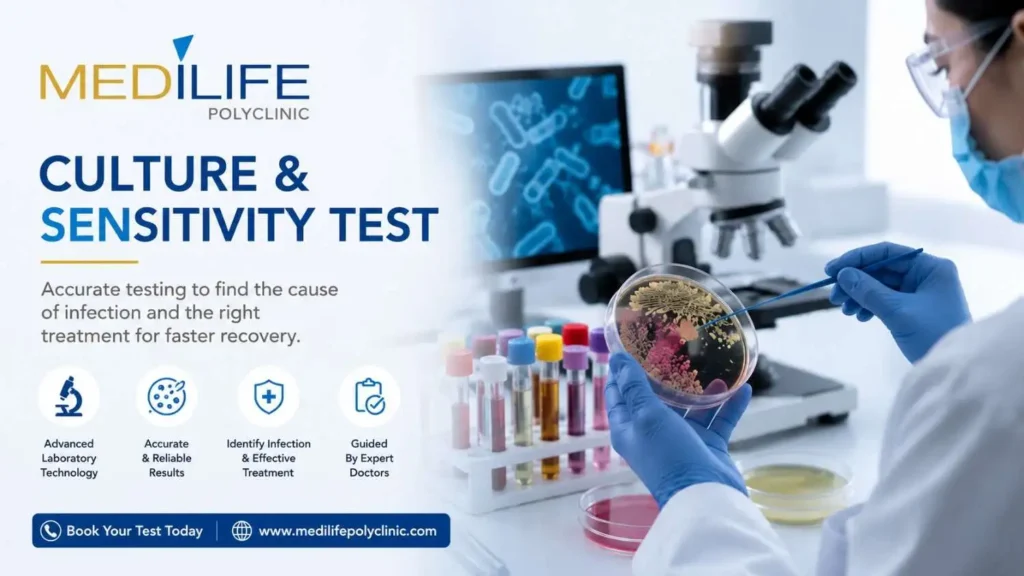
Culture: An example of a sample, including blood, urine or sputum, wound swab, throat swab or another bodily fluid, is gathered and then placed inside a specially designed culture medium. If harmful microorganism or bacteria exist, they can multiply in laboratory controlled conditions, making them easier to identify.
Sensitivity: When the microorganism is discovered, it’s examined against a variety of antifungal or antibiotic medicines. This allows us to identify which medicines can be most effective in slowing its growth, and also which ones the organism has resistance to.
Useful link: Antibody test Dubai
Significance Of The Culture And Sensitivity Test
Symptoms like pain, urinary tract, constant fever, sore throat, wound discharge and chronic cough or an unusual vaginal discharge could be signs of an infection, the microorganisms that cause it are different. The wrong choice of antibiotic could not just delay healing, but could also lead to resistance, which makes subsequent diseases harder to cure.
A culture and sensitivity test is among the most reliable lab tests to determine the precise organism or fungus that causes an illness. When the organism is identified via a culture test, it’s exposed to a variety of antibiotics to find out which will be most beneficial. It allows doctors to provide specific treatment. This improves the results of patients and decreases excessive use of antibiotics.
1. Precise Infection Identification
Contrary to the general blood tests, C&S tests are different from other blood tests that indicate inflammation. The C&S test can pinpoint the specific microorganism responsible for the infection.
2. Specific Treatment
By determining antibiotic sensitivity, physicians are able to prescribe drugs that have proven effective against the pathogen.
3. Speedier recovery and improved end results
A targeted treatment can lead to faster improvement and lower risk of complications.
4. Important for non responsive or recurring infections
For patients who don’t respond to standard treatments or who have recurring infections, this test can provide clarity on longer term care.
How To Read Culture & Sensitivity Test Results
A C&S test report can provide useful information on whether there is an infection there, the microorganism that is responsible, as well as the drugs that will combat it efficiently. The doctor who tests you will analyze the results in conjunction with your medical history and symptoms for the best treatment strategy.
Culture Test Results
A culture test determines whether bacteria or other microorganisms are present and growing in the collected sample.
No Growth: The absence of harmful microorganisms was identified which indicates the absence of infection in the specimen.
Growth Recognized: Microorganisms have been discovered, which confirms the existence of an illness. The laboratory report will identify the organism that caused the problem, for example Escherichia coli (E. coli), Staphylococcus aureus and other potentially significant clinically relevant bacteria or fungi.
Sensitivity Test Results
When the microorganism has been discovered, it is then evaluated against an antifungal or antibiotic medication in order to identify which remedy will be most effective. Results are generally published as:-
Sensitive (S): The microorganisms are likely to react very well to medication and thus are a good treatment alternative.
Intermediate (I): The medicine may still work under certain circumstances, like when a higher dose is used.
Resistant (R): The microorganism cannot be effectively managed by medication. Therefore, a different treatment is recommended.
When Is A Culture And Sensitivity Test Recommended
A C&S test is suggested when physicians need to determine the specific bacteria or microorganism that is causing the infection and identify the most effective method of treatment. Although many infections are able to be managed based on the symptoms and medical evaluation, this test is particularly crucial when the infection is persistent and severe or doesn’t respond to first treatments.
The doctor might suggest a culture or sensitivity test if you suffer from:-
Infections that are recurring, like frequent urinary tract infections (UTIs) and skin infections
symptoms that continue or become worse regardless of completing a treatment of antibiotics or antifungal medications
- Severe infections, which require urgent and precise treatment
- Chronic health issues such as diabetes
- Wound or post surgical infections which show indications of slow healing
Abscesses or wounds that are not healing
The wounds that don’t heal correctly, release pus or are painful for a long time could become infected by resistant or uncommon microorganisms. The C&S examination of wounded pus or wounds identifies the specific organism that is responsible for it and determines which treatment will be most effective. This is vital in preventing issues including deep tissue inflammation and the spread of infection or slow healing.
Infections of the respiratory system
In the case of patients suffering from chronic chest pain, cough and shortness of breath or chest X-rays that are abnormal. The sample of sputum, or respiratory secretions could be suggested. It helps differentiate between fungal as well as other bacterial illnesses.
Systemic Infection
Sepsis can be life-threatening that is caused by your body’s intense immune response to infections. The symptoms can include a high temperature and heart rate that is rapid, anxiety, lower blood pressure or trouble breathing. In these cases the blood and other fluid samples are taken to pinpoint the root of the infection as well as find the most effective antibiotic treatment. A quick and thorough diagnosis is essential to save lives.
Persistent fever with unknown cause
Regular blood tests may reveal swelling, but they are unable to identify the specific organism. The test for culture helps to find the particular pathogen, and allows physicians to bring targeted treatments instead of general, non-specific antibiotics.
Different Types Of Culture & Sensitivity Tests
The culture and sensitivity (C&S) test can be carried out on a variety of clinical specimens, based on the area of disease and the symptoms of the patient. The specimen collected allows labs to determine the organism responsible for the illness and identify the most efficient medication to use to treat the patient.
Urine Culture and Sensitivity Test
A urine analysis and sensitivity test are among the most popular microbiology tests to diagnose UTIs. This test is suggested for those with persistent, frequent or serious urinary problems or when the initial treatment is not working.
This test aids healthcare professionals:
- Find bacteria in urine
- Find out the particular microorganism responsible for the illness.
A urine test is usually suggested after a regular urine analysis reveals indications of infection, such as a white blood cell count or nitrites.
Blood culture and sensitivity test
A blood culture test can be performed in the event of a suspicion that an infection may have developed into the bloodstream.
Doctors might recommend this test to patients suffering from:
- Persistent high fever
- Sepsis or bloodstream infection
- Immune systems that are weak or have health conditions
- Infections which do not respond to treatment at first
Sample Type | Common Use |
Urine culture | diagnosing urinary tract infections |
Blood culture | detecting bloodstream infections |
Wound culture | Identifying bacteria in cuts or ulcers |
Throat culture | Diagnosing strep throat and other throat infections |
Sputum culture | Evaluating lung infections like pneumonia. |
Stool culture | Identifying bacteria causing gastrointestinal illness |
Genital culture | Diagnosing sexually transmitted infections |
Skin culture | Investigating skin infections or abscesses |
The benefits of culture and sensitivity Tests
The reliable test in modern medicine to identify infections and select the appropriate method of treatment. Instead of basing the diagnosis on the symptoms themselves, the test offers clear and reliable laboratory evidence to guide medical professionals towards safe and effective treatment.
Improves Patient Safety
The use of culture and sensitivity testing helps reduce the risks of this by making sure that patients receive only the medications tested to treat the particular infection. Furthermore, targeted therapies play an essential role in battling antibiotic resistance.
Guides Long-Term Care
If you have suffered from repeated infections, for example, recurrent urinary tract infections or respiratory infections, Tests for sensitivity and culture provide essential information about the patterns of the disease. It helps doctors in determining if the same bacteria are behind multiple illnesses or whether resistance is developing to prior treatment.
Targeted Treatment
The majority of antibiotics and antifungal drugs work on every microorganism. Tests for sensitivity determine how an organism reacts to various drugs, and determines which drugs are the most efficient, partially effective or not effective.
The targeted approach leads to better outcomes, less frequent medication changes and increased patient trust regarding the treatment they get in Medilife Polyclinic.
Improved Patient Outcomes
With the help of accurate diagnosis, targeted treatment, speedier recovery and proper use of antibiotics, culture and sensitivity testing greatly improves the overall outcomes of treatment.
At Medilife Polyclinic, the evidence based approach to diagnosis assists us in developing customized treatment plans to address the root of the problem rather than just symptoms. This results in longevity and better quality of treatment.
What To Expect During Your Culture & Sensitivity Test At Medilife Polyclinic
In Medilife Polyclinic, we offer a satisfying testing experience, beginning with consultation and diagnosis.
#1 Medical Assessment
Your appointment begins with a consultation where the health care provider will review your medical history, present issues, allergies and the medications you take. The assessment will help determine if a sensitivity or culture test is necessary and determine the best type of specimen to take.
#2 Sample Collection
If a test is suggested, medical professionals will take the proper specimen using sterilized methods. Based on the symptoms you experience, it could be blood, urine, stool, sputum, wound swabs or other bodily fluids.
#3 Laboratory Testing
Your specimen is then sent to the laboratory which is placed on a specially-designed culture medium which allows bacteria to develop. When the microorganism has been found and tested for sensitivity, the test is conducted to identify which antibiotics or antimicrobial drugs are best suited to fight the infection.
#4 Receive & Review Your Results
The majority of routine tests are ready within 24-72 hours, but some species might require more time for growth. After your results have been compiled, our medical team will present the results, discuss the recommended treatment and address any concerns you might have.
Book Your Culture And Sensitivity Test Today
Culture and Sensitivity (C&S) tests can play a significant role in accurately diagnosing infection and in ensuring that patients receive the most efficient treatment. In determining the microorganism responsible for the illness and also assessing its reaction to various antimicrobials, this test assists medical professionals to go beyond speculation and take a more precise treatment based on evidence.
In the healthcare setting of Dubai, where fast and accurate diagnosis is important, as is sensitivity and culture testing, it helps improve clinical outcomes and reduces the need for antibiotics and aids in tackling the increasing threat of resistance to antibiotics. This is particularly beneficial in cases of recurring, serious, or resistant to treatment, in which traditional treatments might not be efficient.
We at Medilife Polyclinic are committed to providing high-quality lab tests that allow for an accurate diagnosis and individualized treatment strategies. The latest technology in tests of sensitivity and culture assures that patients get the appropriate dosage at the appropriate timing, leading to quicker recovery as well as improved health overall.
Let accurate diagnostics guide your treatment. Visit Medilife polyclinic or contact us now to schedule your culture and sensitivity test and take the first step towards exact, reliable healthcare.
FAQ
1. What are the samples used in this test?
Most common specimens include urine and blood, as well as sputum, throat swabs, wound swabs, and various body fluids, based on the location of infection.
2. What does a culture and sensitivity test do?
A culture and sensitivity test is a method of identifying the microorganism that causes an infection, like mold or bacteria. It also decides what antibiotics or drugs are most effective against it.
3. Can a culture and sensitivity test detect viruses?
No. The tests for bacterial cultures that are standard identify bacteria (and sometimes fungi). For viral infections, there are different test methods, including the PCR test.
4. What is a bacteria culture test?
The test is looking for the presence of harmful bacteria in samples that are taken from your body, which could include urine, blood, skin, sputum, the fluid from your throat, wounds or any other type of tissue. The specific type of test depends on the area where you feel the problem is.
In order to conduct the test, the lab technician will place your specimen in a growth medium, which is rich in nutrients that allow bacteria to multiply, so that they are able to be examined through a microscope to identify them. The process of growing bacteria to allow for recognition generally requires about one to two days; this is the reason that most results from a culture will be available in a matter of days. However, some bacteria develop much more slowly, and therefore, results could take up to a week longer.