
Thyroid Panel Test: Understanding Your Thyroid Health
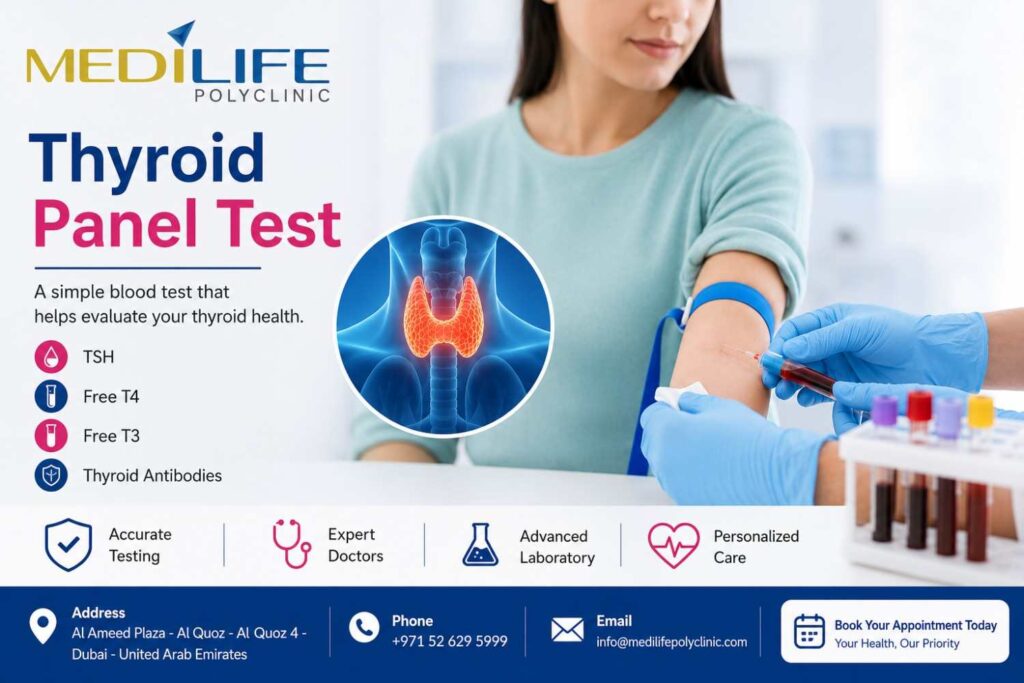
Thyroid panels are an blood test that tests certain hormones that your thyroid produces as well as thyroid-related antibody. It evaluates the levels of TSH as well as total and free T4 as well as total and free T3 and T3 antibodies such as TPO (thyroid peroxidase-related antibodies). The results aid in diagnosing conditions such as overactive thyroid or underactive thyroid.
A thyroid panel tests the presence of several thyroid hormones present in blood. The thyroid gland is located located in your neck which is responsible for controlling hormonal release which regulate the rate at which your metabolism works and how your body converts foods into energy. The tests will show how you thyroid gland functioning in determiningwhether there is too much (hyperthyroidism) or a lack of hormone (hypothyroidism) is released.
If you’ve experienced excessively tired, having weight gain without any explanation, experiencing hair loss or constipation, insomnia, or you’ve noticed shifts in your blood pressure or mood, an thyroid test will evaluate thyroid function. No fasting or any special preparation is required. If you’re already taking thyroid medication such as levothyroxine have your blood drawn prior to taking your morning dose to get the most precise reading.
A thyroid panel test is a blood test used to evaluate thyroid function. If you are experiencing unexplained fatigue, weight changes, or other symptoms, learn more about a Thyroid Check-Up in Dubai.
What Is a Thyroid Panel?
The results of a thyroid panel will help your doctor diagnose some health issues. Normal ranges may differ therefore always speak to your physician about results.
The thyroid panel tests the hormones produced in your thyroid as well as antibodies that could influence the thyroid’s function. It’s a blood test which can aid your physician in diagnosing thyroid problems and determine if your thyroid gland is functioning.
There are a variety that comprise thyroid tests. Your doctor can inform you the type of thyroid panel or combination of tests you require according to your health history and symptoms. A complete thyroid panel tests your levels of hormones as well as antibodies:
- TSH (thyroid-stimulating hormone)
- T3 or T3 for free (triiodothyronine)
- T4 or T4 for free (thyroxine)
- TPO (thyroid peroxidase antibodies)
- Tg (thyroglobulin)
- Tg Ab (thyroglobulin antibodies)
- TsI (thyroid-stimulating immunoglobulin)
A typical thyroid panel tests these hormones:
- TSH
- T3 or no cost T3
- T4 or T4 for free
The thyroid antibody panel tests Thyroid antibodies such as:
- TPO
- Tg Ab
A thyroid panel is part of the blood testing services in Dubai available for evaluating different aspects of your health.
Who is in need of a thyroid panel?
It is possible to require this test if you are suffering from symptoms of thyroid disorders. This could include sudden weight loss or increase as well as mood fluctuations, fatigue and being too hot or cold frequently and hair loss or dry skin.
Health care providers also utilize thyroid tests to:
- Examine your thyroid function in general
- Find thyroid problems, such as thyroid that is not active or hyperactive thyroid
- Check to see whether your thyroid medication is effective
- Examine thyroid disorders for those at risk for thyroid disorders
- Find out autoimmune thyroid disorders such as Graves” disease or Hashimoto’s disease.
Test Details
What is the procedure for testing?
The thyroid test is an examination of your blood. It is performed by a doctor taking a sample of fluid from the vein on your arm. It takes only about a minute. The blood sample is sent to a lab, where it is analysed. Your doctor receives a report containing the level of thyroid hormone and/or antibodies of your blood. The information they gather is used to determine whether you have an thyroid problem.
The only risk and negative side effects that can be attributed to an thyroid test are those that occur from a blood draw. Blood draws are not a risk and side effects are typically mild. The possible side effects include swelling, bruising, or minor pain at the site at the site where the needle was placed.
Patients can visit a trusted blood test lab in Al Quoz for convenient sample collection and laboratory testing.
Results and Follow-Up
What happens following the thyroid test?
It could take up to one week to receive the results. Your doctor will explain to you the significance of your results for your health. Based on the results you receive they might recommend further tests, or may decide to arrange a follow-up thyroid test to be scheduled for a future date.
What kind of results do you see and what do they indicate?
Every hormone or antibody on a thyroid panel is evaluated independently. The doctor examines the result for each level and then compares it with an average range. They then look at how the results are matched together.
In general, test providers prefer these results (normal results can vary based on the location where the test is conducted due to various methods of testing):
- TSH: 0.3 to 4.0 mIU/L
- Free T3: 2.3 to 4.1 pg/mL
- Free T4: 0.7 to 2.1 ng/dL
- Thyroid peroxidase antibody (TPOAb): Less than () 5.6 IIU/mL
- Thyroglobulin antigens (TgAb): < 4 IU/mL
- Thyroid-stimulating hormone receptor antibody (TRAb): < 1.75 IU/L or 3.3 IUL, based on the test type.
- Thyroid-stimulating immunoglobulin (TSI): < 0.55 IU/L
What do my results mean?
TSH can be measured as milli-international units for each Liter (mIU/L). The values of reference can differ between labs. Your service provider will review your findings with you and looking at them against the laboratory’s references.
Thyroid issues are the 2nd most frequent endocrine disorder for women who are reproductive. The pregnancy process requires a 40 to 90 percentage rise in the thyroid hormones. Therefore, the trimester-specific reference intervals are used when evaluating thyroid problems. Thyroid issues may have negative consequences during pregnancy, both for the mother as well as the development of children and infants. Standard reference ranges shift during pregnancy. TSH drops in the initial trimester, but typically is back to normal after midway through the 2nd trimester. T3 Free and T4 decrease little in the third and second trimesters. Your doctor will assess the results according to specific reference intervals for each trimester.
Thyroid disorders usually result from the production of excessive amounts of thyroid hormone (hyperthyroidism) or too little (hypothyroidism). Subclinical thyroid disorders are when the levels of thyroid hormone fluctuate but don’t cause any symptoms.
If your TSH is normal, you are not
The thyroid is producing hormones at a healthy amount. If you continue to experience symptoms it could be due to a different problem: adrenal disorder, hormonal imbalances Vitamin deficiencies, nutritional problems with kidneys or livers or lifestyle issues (stress and inadequate exercise, or poor sleeping practices). Discuss with your doctor about follow-up testing to determine if you have other issues.
Thyroid hormones are part of the broader range of hormones that can be evaluated through a hormone test in Dubai.
If your TSH is elevated (possible thyroid hypothyroidism)
The pituitary gland is sending out extra signals due to the thyroid not creating enough hormone. If the Free T4 level is low, this could be a sign to hypothyroidism primary. Treatment usually involves Levothyroxine (SynthroidTM). In general, patients experience improvement within a few days to several weeks. Most efficient absorption of medication is when it is taken early in the morning and with a full stomach. Following the same schedule and not skipping any days is most effective. It is recommended to follow the Mayo Clinic’s summary of hypothyroidism mentions that the condition is usually easily controlled with regular medications and regular monitoring.
When your TSH level is moderately high, but your Free T4 is normal, it’s known as hypothyroidism that is subclinical. It’s not always a need to be treated immediately. TPO tests for antibodies are often the next step to determine whether thyroid disease caused by an autoimmune condition is the cause or if there are other reasons.
If your TSH is not high (possible excessive thyroidism)
The pituitary controls the function of thyroid. If there’s excessive thyroid hormone in circulation, TSH production will be decreased. If the level of Free T4 or T3 is elevated in conjunction with the low TSH, hyperthyroidism is possible. Your doctor will examine the entire picture including the symptoms and perhaps images, before recommending the what next steps to take.
Subclinical hyperthyroidism is characterized by an elevated TSH, but normal T3 and Free T4. It’s typically monitored, rather than being treated immediately, based on the severity of your symptoms and age.
A hormone blood test can help measure specific hormone levels, including thyroid-related hormones, when recommended by a healthcare professional.
Why Choose Medilife Polyclinic for Thyroid Testing in Dubai?
The Medilife Polyclinic Patients have access to expert healthcare services in Dubai and receive medical guidance that is that is tailored to meet their specific requirements. If you are experiencing symptoms that are likely to be linked with thyroid disorders Our healthcare experts can examine your issues and recommend the appropriate tests for diagnosis if needed.
If you’re in need of an initial thyroid exam or a regular check-up, having the most appropriate test at the proper moment can allow your doctor to make informed decisions regarding your treatment.
Medilife Polyclinic provides comprehensive laboratory services in Dubai for diagnostic testing and health monitoring.
FAQs
The typical adult range for adults is 0.4 to 4.0 mg/L, although laboratories may have different cutoffs. The ranges decrease during pregnancy. The report will include the range that was used by the laboratory which handled your specimen.
No. You are able to take a normal diet and drink before taking a thyroid blood sample. TSH levels aren't affected significantly by food. The only thing that's important is to stop taking biotin supplements for at least 72 hours prior to the draw.
No. If you are taking levothyroxine or a thyroid hormone replacement, have your blood taken prior to taking your dose in the morning. The dose you take first could temporarily increase the amount of Free T4 and make the results more difficult to interpret.
Yes. Hypothyroidism is a factor in difficulties in getting pregnant as well as problems during the pregnancy like preterm birth and miscarriage. Based on the National Institute of Diabetes and Digestive and Kidney Diseases' thyroid testing resources the thyroid function is usually tested during an fertility test or during the initial prenatal visit. TSH reference ranges are smaller in pregnancy, and the results must be interpreted in relation to specific norms for the trimester.
Yes. thyroid disorders are much more prevalent for women than men. The thyroid condition is more prevalent during the postpartum phase and in menopausal and perimenopausal stages. Because symptoms such as weight loss, fatigue, and mood swings are all a part of hormone changes Thyroid testing is something worth taking into consideration when symptoms start to show appear during these phases of life.
TPO (thyroid peroxidase) antibodies are proteins that are produced through the immune system after it is mistakenly attacking thyroid peroxidase an enzyme required for the production of hormones. TPO antibodies that are high TPO antibodies can indicate thyroid disorders that are autoimmune, most frequently Hashimoto's thyroiditis (underactive thyroid) or Graves' disease (overactive thyroid). These antibodies may not form included in a normal thyroid test, but they are typically included when TSH is not abnormally high and the cause isn't known.
No. The thyroid panel tests hormone levels in blood. It doesn't detect structural problems such as goiter, nodules or cancer. The ultrasound scans of the thyroid will reveal abnormality in dimensions, shapes, and possible nodules. Additional imaging studies could include the thyroid nuclear scan with tracer radioactive iodine (iodine is vital in the creation of thyroid hormones T3 and T4). If nodules or other tumors are observed, a minimally invasive procedure, called a FNA, or fine needle aspiration (FNA) is typically performed to collect cellular tissue that can be examined with microscopes to determine whether it's cancerous. A complete or partial thyroidectomy could be the next option. It is possible to live with no thyroid however, they will need to use a daily thyroid hormone replacement therapy.
If you have been advised to undergo thyroid testing, book your appointment with Medilife Polyclinic for professional guidance.