
UTI Test: What You Need to Know
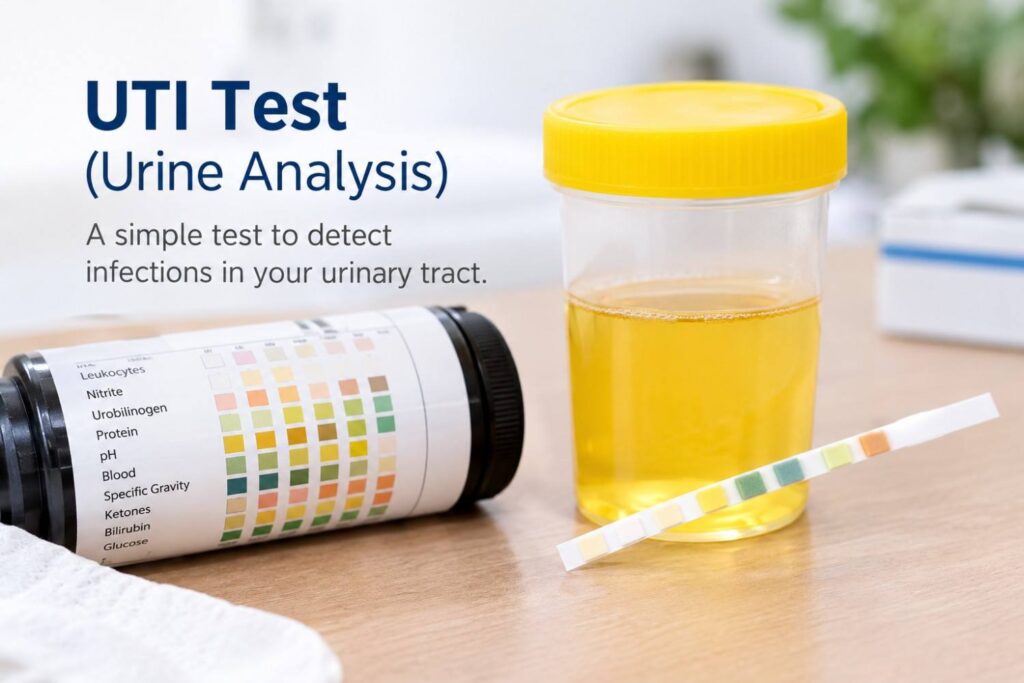
When your healthcare professional believes you have a urinary tract infection, they will likely request a UTI test. Generally this test will be a urine test to look for signs of an infection. Depending on your case, your healthcare professional may request other tests in addition to or in replacement of urine tests to help diagnose and treat the infection.
A urinary tract infection (UTI) is a common infection that occurs in the urinary system. There are several parts of the urinary system, which is why a UTI can occur in several places. Bacteria that are normally found outside the body can enter the urinary system and cause a UTI. Some symptoms include the frequent need to urinate, pain while urinating and pain in the sides or lower back. A urinary tract infection can be treated and cured with a prescription of antibiotics.
Useful link: Urine analysis test in Dubai
About the UTI Test
Purpose of the Test
This test determines if an infection in your urinary tract is bacterial or fungal and, if so, which organism is involved. UTIs typically occur in the bladder and/or urethra (a lower tract infection). However, infection can occur in the ureters and kidneys. An infection in the kidneys is more serious, and is called pyelonephritis.
A urine culture can serve two functions:
Screening: The U.S. Preventive Services Task Force has indicated a one-time screening for asymptomatic bacteriuria with a urine culture for pregnant persons at 12–16 weeks of gestation, because if bacteriuria is left untreated, it can lead to a kidney infection.
Diagnosis: A urine culture is ordered when symptoms of a UTI do not improve after taking an antibiotic, or other UTI symptoms are present, such as cloudy, offensive smelling urine or the need to urinate frequently and/or with pain.
A urine culture will not identify any STIs. Let your provider know if you believe an STI, like Chlamydia, is the source of your symptoms and the appropriate test will be ordered.
When should I get a UTI test?
Consider testing if you have any of the following:
- burning with urination
- urge to urinate frequently with little urine output
- bloody or cloudy urine with a strong smell
- Lower belly or pelvic pressure or cramping with urinary symptoms that returned after taking antibiotics
- Urinary symptoms with a current pregnancy
diabetes, kidney disease, or an impaired immune system, and other urinary symptoms
A fever greater than 100.5°F along with back or flank pain, nausea or vomiting and other urinary symptoms may indicate a kidney infection and should be evaluated immediately.
Also like to read, Antibody test Dubai
How It Works
How to get tested
You don’t need to see a doctor to get this test. You can order it online. A physician reviews and authorizes your order. You should receive your results within 1 to 3 business days.
Before the test
You don’t need to do anything to prepare for this test.
During the test
To understand urinalysis, the NIDDK says that a urine test helps check if your urine sample has blood and white blood cells, and a culture grows a bacteria sample from your urine to check if there are bacterial infections, and if so, what kind, and if antibiotics are recommended.
For the collection
Wash your hands and collect the urine midstream. The first and last steps are discarded. Use the wipe provided to clean your genital area before starting to reduce contamination of the sample. You need to collect 1-2 ounces of midstream urine. The rest of the sample is discarded. Give the urine sample to the lab staff.
Also like to read, blood test lab in al quoz
What Tests Are Used for a UTI?
Various tests are performed for a UTI, some of which are:
- Urinalysis
Abnormalities in a urine sample may point towards an infection and warrant further testing. Various components of a urine sample may be tested for, including blood, white blood cells, and nitrites. A urine sample may also be tested using a dipstick which contains reagents for detecting leukocyte esterase and nitrites.
- Urine Culture
A urine culture is a lab test used to isolate the bacteria causing an infection, if any. The sample is inoculated on a growth medium and observed for bacterial growth. The test takes longer than a simple urinalysis.
A health care provider may order a urine culture based on the patient’s medical history and the need to determine the cause of the patient’s symptoms, particularly if the patient is at risk of developing an infection.
How Is a UTI Test Done?
A UTI test requires a sample of urine. You may be asked to give a midstream urine sample. A midstream sample is started and stopped multiple times in order to collect a sample that contains little to no contamination.
Your health care provider or the laboratory will tell you what to do to collect the urine sample for your test.
Useful link: Urine routine test
What Can a UTI Test Detect?
An abnormality in your urine may indicate an infection or other issues with your urinary system.
Some abnormalities detected with urine testing are:
- White blood cells
- Blood in your urine
- Presence of nitrites and leukocyte esterase
- Bacteria
- Other abnormalities in your urine
Not all abnormalities in your urine mean that you have a UTI. Your other tests and symptoms are taken into account when coming up with a diagnosis.
When Do You Need A UTI Test?
Speak to your doctor if you have any of the following a burning feeling when you pee, peeing too often, the urge to pee too often, pain or pressure in your pelvis, bloody or cloudy urine, urine that smells bad, and other changes in your pee.
You should seek immediate medical attention if you feel a fever, vomiting, chills or pain in your side, back or abdomen. This may mean that the infection has moved to your kidneys.
You may also like to read, laboratory services in Dubai
FAQ
Culturing urine in a lab is the best method to detect UTIs. You are asked to provide a midstream urine sample and the lab grows the sample to see if there are any bacteria or fungi present. Testing urine for nitrites and leukocyte esterase (white blood cells) is the basis for over the counter (OTC) UTI tests and gives an immediate result. These tests, however, are far less accurate.
Yes. Dipstick urine tests can miss certain kinds of bacteria and UTIs, such as Enterococcus and Staphylococcus saprophyticus.
No, a UTI will not affect the result of a blood or urine pregnancy test. A UTI can cause a false positive on a dipstick urine test if the UTI is infected. The infection is not related to the pregnancy test, which tests for the hormone hCG.
Bacteria from the skin or the rectum can make their way into the urinary tract, often through the urethra. The anatomy of females positions the opening of the urethra closer to the anus and vagina, which is why they are at more risk of developing bladder infections. The CDC estimates that 50–80% of women will get at least one UTI in their life and 30–40% of women will get recurrent infections. Risk factors can include prior UTIs, changes in vaginal flora from menopause or from the use of spermicide, pregnancy, diabetes, and a weakened immune system.
No. A UTI can happen in any part of the urinary tract and is most commonly found in the bladder and urethra. A kidney infection (pyelonephritis) is when an infection in the bladder or urethra spreads to one or both of the kidneys. The USPSTF mentioned that pyelonephritis is one of the most common non-obstetric reasons for hospitalization during pregnancy and is associated with other pregnancy complications. Some symptoms that indicate that an infection is in the kidneys and not the bladder are if a person has a fever, back or flank pain, nausea or vomiting, along with other symptoms of a urinary tract infection.