
Vitamin Test: What It Checks, When You Need It and Where to Get Tested in Dubai
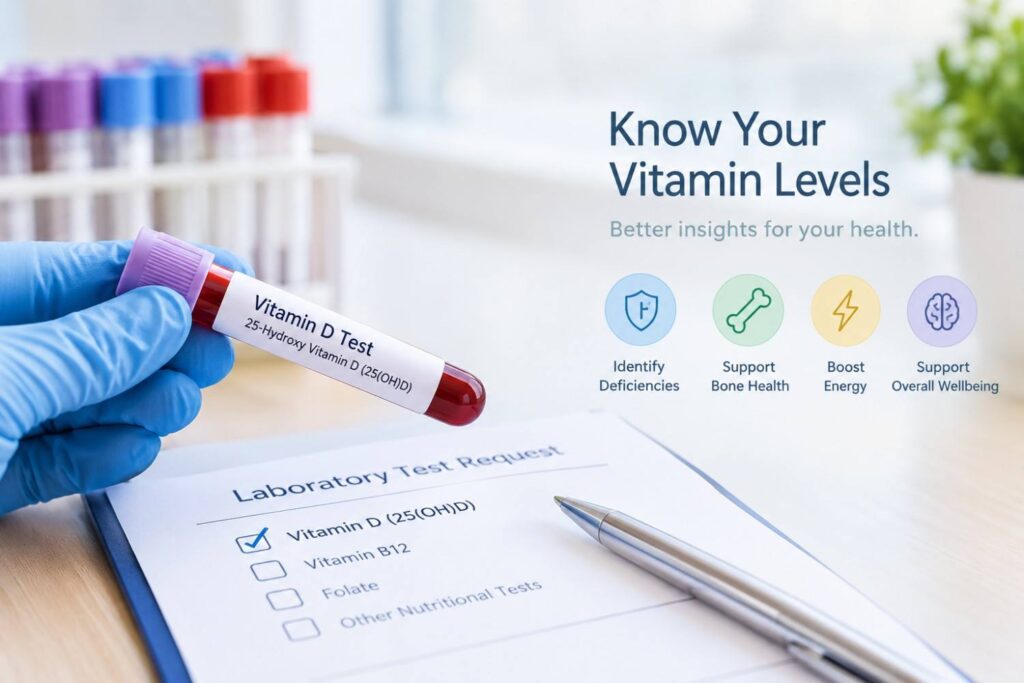
Vitamin tests are blood tests that measure the amount of a vitamin that is present in the blood. Measuring the levels of certain vitamins can uncover deficiencies in those vitamins. Some examples of vitamins that can be tested are D and B12. However, other tests may be recommended based on the symptoms and needs of the patient.
The Medilife Polyclinic, located in Al Quoz, Dubai, offers laboratory tests that measure vitamins and other essential nutrients in the blood.
What is a vitamin D test?
A vitamin D test is used to evaluate the level of vitamin D in the blood. Vitamin D plays a role in the normal function of muscles, nerves and the immune system. It aids calcium absorption, which is needed for normal bone growth and remodeling. Vitamin deficiency can lead to soft bones (rickets) and other health conditions.
Three ways to obtain vitamin D are
– Synthesis in the skin as a result of exposure to the sun.
– Consumption of foods that naturally contain the vitamin (e.g., fatty fish, liver and egg yolks).
– Taking vitamin D supplements.
Vitamin D is also added to certain foods (i.e., milk and cereals).
First, the body must change vitamin D to 25-hydroxyvitamin D (25(OH)D) with the help of the liver. Blood tests to assess vitamin D levels are measures of 25(OH)D. Other, less common blood tests assess active vitamin D. Active vitamin D is produced in the kidneys and also aids in the regulation of blood calcium levels. Active vitamin D can also be referred to as calcitriol, and its production and secretion are increased in certain types of kidney disease.
Other names: 25-hydroxyvitamin D, ergocalciferol test, cholecalciferol test, vitamin D2 test, vitamin D3 test, calcidiol test.
Useful link: vitamin D test Dubai
What Vitamins Can Be Tested?
Tests are chosen based upon the signs and symptoms you experience and your medical history. The following are some examples of vitamin tests.
Vitamin D Test
This test measures the level of vitamin D in the blood. Vitamin D helps the body absorb calcium and maintains the health of bones and muscles.
This test may be requested if your health care provider thinks you have a deficiency of vitamin D. Risk factors for vitamin D deficiency include inadequate exposure to the sun, inadequate nutrition, and certain bone and health conditions.
Vitamin B12 Test
This test measures the level of vitamin B12 in the blood. It plays a role in blood and nerve health.
This test may be requested if signs and symptoms of deficiency of vitamin B12, such as anemia and nerve problems, are present.
Folate Test
Folate is a type of vitamin B9. Blood levels of Folate may be measured with a blood test. This test is ordered along with a vitamin B12 test, to evaluate causes of anemia and other conditions.
What is it used for?
This test measures levels of vitamin D in the blood. This test is performed when symptoms related to a lack of vitamin D are observed, and a healthcare professional suspects a deficiency of the vitamin.
Vitamin D level tests are not required for everyone. It is recommended by your healthcare provider only if there is a chance of vitamin D deficiency.
You may also like to read, vitamin iv drip dubai
Why do I need a vitamin D test?
A vitamin D test may be ordered if you are diagnosed with conditions that are related to low levels of vitamin D, such as:
- Osteomalacia
- Low bone density (osteopenia and osteoporosis)
- Children may also develop conditions that affect normal bone growth, such as rickets, from lack of vitamin D
- Conditions that may be related to low levels of vitamin D may also be diagnosed by the presence of:
- Bone pain
- Muscle pain and weakness
- Deformed and soft bones
- High-risk conditions for low levels of vitamin D may include:
- Inadequate sunlight exposure (e.g., covering skin, staying indoors, sunscreen, living in high latitudes)
- Poor nutrition (anorexia)
- Malabsorption (Crohn’s disease, ulcerative colitis, celiac disease)
- Weight loss surgery
- Vitamin D-binding protein deficiency (renal or hepatic disease)
- Use of certain medications (statins, weight loss drugs, and corticosteroids)
Useful link: weight gain drip Dubai
It is important to test the levels of vitamin D for babies and children to evaluate growth and development. Low levels of vitamin D may be caused by exclusive or major reliance on breast milk.
Breast milk contains very little vitamin D. The American Academy of Pediatrics (AAP) suggests that all infants, except those that are fed only formula, be supplemented with vitamin D beginning in the first few days of life.
Insufficient vitamin D intake can cause:
Rickets, a condition that affects the growing bones in children. These children may also experience muscle weakness.
Dental issues such as enamel defects and loss of teeth.
- Symptoms of hypervitaminosis D:
- Poor appetite
- Weight loss
- Abdominal pain
- Nausea and/or vomiting
- Muscle weakness
- Constipation
It is rare that hypervitaminosis occurs, and it would only occur if a person took more vitamin D than the body could metabolize. That is why health care providers generally recommend a vitamin D level test to determine if a patient’s condition is improving.
You may also like to read, Antibody test Dubai
How do vitamin D blood tests work?
Blood tests to evaluate vitamin D levels require a laboratory analysis of a blood sample. Blood is usually drawn from an arm vein and requires only a very small sample. A health care professional will clean the arm with an antiseptic and then put a tourniquet on the upper arm to locate the vein. He or she will then insert a very thin needle into the vein and remove a small sample of blood. Once the blood has been collected, the needle is removed, and the tourniquet is removed. The arm may feel a brief sting and then some slight bruising or tenderness from where the needle was inserted.
Is there anything I should do to prepare for this test?
Because there are very few complications associated with vitamin D testing, no special preparations are required. It is a good idea to tell your health care provider about all of the medications and/or supplements that you are currently taking. Depending on the medication, some of them may affect the results of the vitamin D test.
What do the results mean?
Results of a vitamin D test may be reported as “total vitamin D” or as amounts of vitamin D2 and D3 separately. In the body, vitamin D2 and D3 have the same effects and functions. Thus, the total amount of vitamin D is the value of interest.
Generally, the terms used to describe the value of total vitamin D in the results are as follows:
- Deficient: Indicates an extremely low level of vitamin D, and may adversely affect bones and overall health.
- Insufficient: Indicates a low level of vitamin D, which may affect bones and overall health, and may not manifest in symptoms.
- Sufficient/Optimal: Indicates a vitamin D level that is sufficient to ensure normal and good health of bones and overall health.
- Toxic: Indicates an abnormally high level of vitamin D which may adversely affect health.
Your total vitamin D levels being deficient/insufficient could mean any of the following to you:
- You do not obtain enough vitamin D through diet and/or sun exposure.
- You have a malabsorption disorder.
- You have a renal or hepatic disorder.
- You are taking medication that affects vitamin D.
To correct your deficiency, your doctor may prescribe or recommend dietary modifications and/or vitamin D supplementation. Exposure to the sun is not suggested due to the increased risk of skin cancers and photo-aging.
Explore for more about, Diagnostic imaging centre in Al Quoz
Why You Should Not Take More Vitamins Without Getting Tested
Taking more vitamins does not necessarily mean that it will improve your health. This is because some vitamins may build up and even be detrimental to your body when taken in extreme amounts.
An example of a vitamin that may be harmful when present in high levels is vitamin D.
So, it is important that you consult your doctor about your symptoms and the supplements you want to take. It is always a good idea to get testing done if you feel that it would help your case.
Vitamin Test in Dubai at Medilife Polyclinic
If you are looking for a vitamin test in Dubai, you could try Medilife Polyclinic, as they offer laboratory testing, including vitamin and nutrient testing, in Al Quoz, Dubai. Their laboratory offers vitamin D and B12 tests, among other tests.
The laboratory has a wide range of tests, including other blood tests that your doctor could ask you to get done according to your symptoms and health needs.
FAQ
Vitamin D deficiency can be caused by a number of things. These include lack of sun exposure, a poor diet, certain medical problems, and age.
If you begin experiencing certain symptoms or are in a high-risk category, then you should consider discussing a vitamin D test with your primary care provider.
The best time of the day to get sunlight for vitamin D production is during the middle of the day, when the sun is the highest in the sky. Thus, the ideal time for a sunbathing session would be between 10 am and 3 pm.
Unfortunately, it is not possible to get all the vitamin D that you need from the food you eat.
The treatment for vitamin D deficiency usually takes several weeks, maybe even a few months.